The Anatomy of Interruption
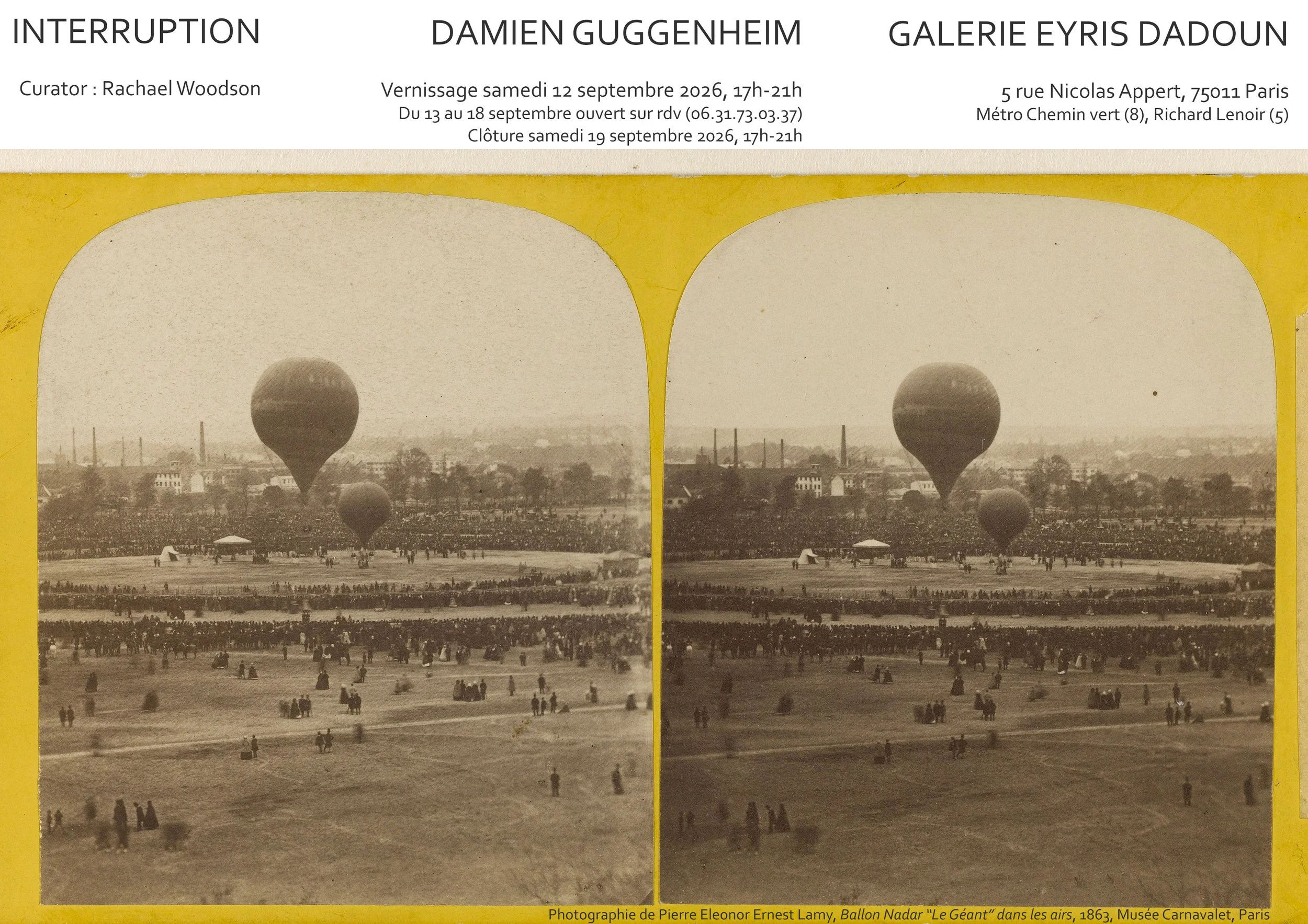
In Regarding the Pain of Others, Susan Sontag proposed a multivalent analysis of how images of trauma are diffused and received, reevaluating the thinking she’d put forth thirty years earlier. Though much of the text references international conflicts up until the 1990s, its publication was opportune, coinciding with the 2003 invasion of Iraq and the golden age of non-stop cable news networks. She argued that the flood of crisis imagery and short news stories that we surf on “little screens” is effortlessly absorbed by a machinery that packages human experience into easily consumable commodities.
Despite the psychological gridlock this cycle produces, Sontag also pointed out the prevailing power of images, which, rather than offering resolution, serve as invitations to “pay attention, to reflect, to learn, to examine the rationalizations for mass suffering offered by established powers.” How do these conditions operate today, when the cultural sphere has been swallowed whole and art, media, and activism all feed the factory line of the deep scroll? Damien Guggenheim addresses the friction between ethical awareness and systemic paralysis in his exhibition Interruption, presented at Galerie Eyris Dadoun. Reacting directly to short news articles from international media sources, the artist stages a highly pressurized space with a series of video and installation works that reframe the geopolitical logistics they derive from.
The installation Amazone (2026) is composed of a visceral array of oval balloons outfitted with macramé nets. Their cargo—bright bundles of packaging from various brands of abortion and emergency contraceptive pills, the latter of which are available for purchase on digital marketplaces. Rigged into a state of suspension in the gallery space, Amazone gives off an uncanny feeling, sparking a succession of associations: a mythological woman, a uterus, a river, candy-colored condoms, online shopping, a drone, a light bulb. With this work, Damien Guggenheim juxtaposes imagery of recent instances of weather balloons smuggling cigarettes along the Polish-Belarusian border with the volatile landscape of reproductive health care in the United States. Following the overturning of Roe v. Wade in 2022, 13 states enacted near-total bans on abortion, criminalizing access to mifepristone, the primary abortion drug in the country. "Shield laws” implemented by a dedicated network of states in an attempt to maintain a pipeline of pill access by mail delivery faced uncertainty in the courts as recently as last spring. Amazone drifts between the harsh reality of systemic control and the idea of strategic circumvention.
The exhibition's durational video works further wedge open the interstice of interruption. In L’opposant (2026), a man sits on a folding metal chair in a subterranean vault. Filmed from above, in 4:3 format, the camera’s image suggests the perch of a surveillance camera or a recorded interrogation. The man says nothing but emits a steady series of sharp gulps between breaths, recalling the somatic condition of former Brazilian president Jair Bolsonaro, whose political imprisonment has been marked by prolonged episodes of the hiccups and subsequent medical procedures. Amidst the grey stone and concrete setting, the bright orange clothing worn by L’opposant stands out. Part tourist garb, part jumpsuit, the figure’s uniform recalls other cases of high-profile inmates, whose every move seems to dominate headlines, fueling the public’s rather grotesque fascination with them. Construire un mur (2024) projects a giant scroll of signatures that were filmed from a computer monitor and slowed down to a snail’s pace. The long list of names and professions were sourced from a widely-circulated petition launched in 2024 by the association “Art Not Genocide Alliance,” which called for the exclusion of Israel from participation in that year’s Venice Biennale. Blown-up and projected into a low-clearance area of the gallery, the crawling list of names becomes a repetitive mass, submerging the viewer in a hypnotic pull.
With Interruption, Damien Guggenheim investigates the packaging of modern narratives. His use of stand-ins, screens and decor reflects an ongoing interest in upending the mechanics of storytelling, as seen in earlier work that examined historical myths and legends (the Pied Piper, Kaspar Hauser), for which he built maquettes and staged rewrites. This exhibition marks a shift toward the “history of the present” with recent faits-divers acting as prisms for examining the power dynamics that play out right in front of us, and in which we willingly participate. The works function as double interruptions, both reiterating their sources and forcing the gears of digital-era desensitization to grind to a halt, if only for a few minutes.
Text on Damien Guggenheim’s solo exhibition Interruption at Galerie Eyris Dadoun.
Paris, France
September 2026
Published by the gallery in English and French